The Yamas: Yoga's Code of Ethical Living
 Lavanya June 15, 2025 8 min read
In Patanjali’s Yoga Sutras, the path to liberation is laid out as eight interconnected limbs — ashtanga, meaning “eight limbs.” Most Western practitioners know the third limb (asana, physical postures) best. Yet Patanjali placed the Yamas first, and deliberately so.
The Yamas are not rules imposed from outside. They are observations about what it means to live in harmony — with other beings, with the world, and with yourself.
What Are the Yamas?
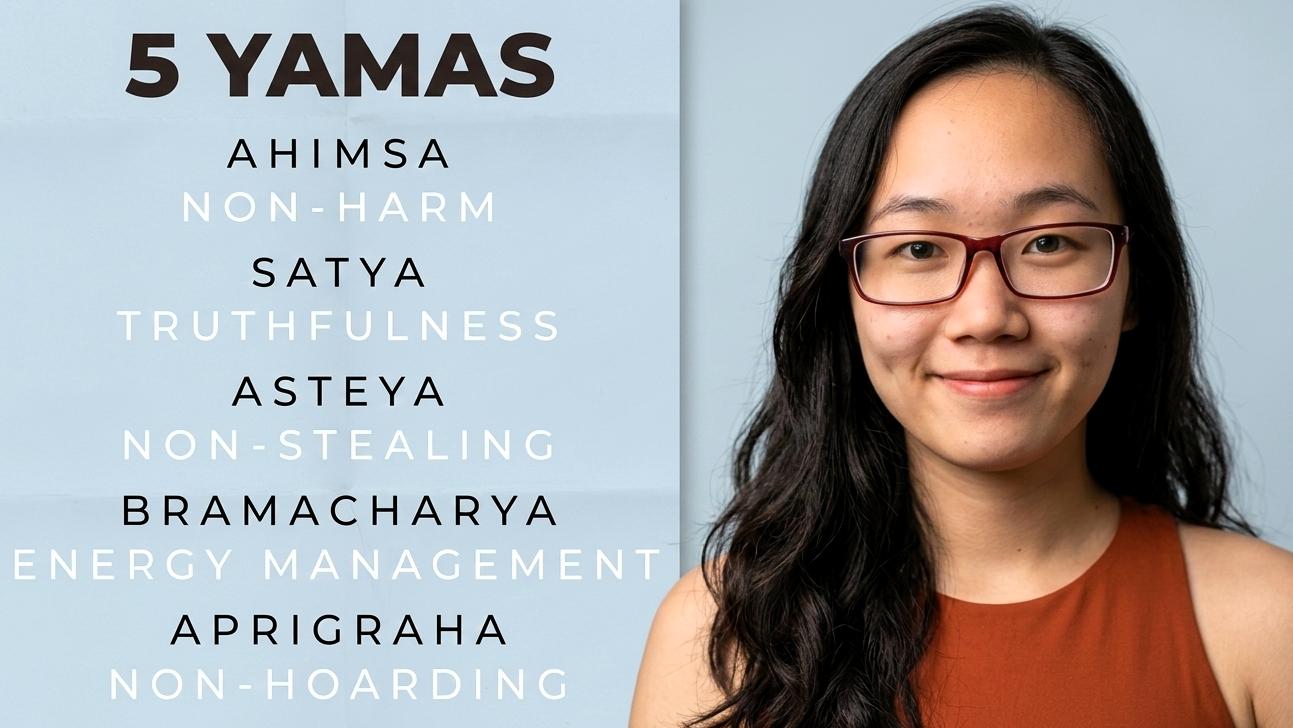
The Sanskrit word yama means “restraint” or “discipline.” There are five:
1. Ahimsa — Non-Violence
Ahimsa is the commitment to cause no unnecessary harm — in action, speech, or thought. It is the most fundamental of the Yamas, and in many ways contains all the others.
Ahimsa on the mat might look like releasing a pose before it causes injury. Off the mat, it extends to the words you use with yourself and others, to your food choices, to how you respond when you feel wronged.
Gandhi made ahimsa the cornerstone of a political movement. For most of us, the practice begins much closer to home — noticing the harshness we direct inward.
2. Satya — Truthfulness
Satya means truth — but not blunt, weaponised truth. Patanjali teaches that satya must always be balanced with ahimsa. If a truth would cause unnecessary harm, wisdom asks us to pause.
Satya in practice means speaking honestly about your experience in class (“this hip is tight today, not lazy”), communicating clearly in relationships, and being truthful with yourself about what you want and what you fear.
3. Asteya — Non-Stealing
Asteya goes beyond not taking physical objects. It includes not stealing time, energy, attention, or credit. It means not coveting — not living in a state of wanting what belongs to someone else.
On the mat, asteya appears when you stop comparing your practice to your neighbour’s. Off the mat, it might mean showing up on time, being fully present in conversation, and acknowledging others’ contributions.
4. Brahmacharya — Wise Use of Energy
Traditionally translated as “celibacy,” brahmacharya is better understood for modern practitioners as the conservation and wise direction of vital energy.
Every human being has a finite reservoir of life force — prana. How do you spend it? Scattered across endless screens, drama, and distraction? Or channelled toward what truly matters?
Brahmacharya invites us to ask: What am I feeding with my energy today?
5. Aparigraha — Non-Grasping
Aparigraha means not clinging — to possessions, outcomes, identities, or relationships. It is the practice of holding life lightly.
This does not mean indifference. You can love deeply without needing the person to stay unchanged forever. You can work hard toward a goal without collapsing if it doesn’t arrive. Aparigraha is the difference between engaged participation and white-knuckled control.
The Yamas as a Living Practice
It would be a mistake to read the Yamas as a checklist. Patanjali was not writing a rulebook — he was describing the natural qualities that arise in a practitioner as consciousness deepens.
Begin with one. Choose the Yama that resonates (or unsettles) you most. Watch how it appears in a single day — on the mat, at work, at the dinner table. Notice without judgment.
Over time, the Yamas stop being things you do and become ways you are.
That is the beginning of yoga.
Yoga Hoa Sen
Lavanya